Architecting Trust: How MaAvatar Builds the Relationship Finance Valuation Layer
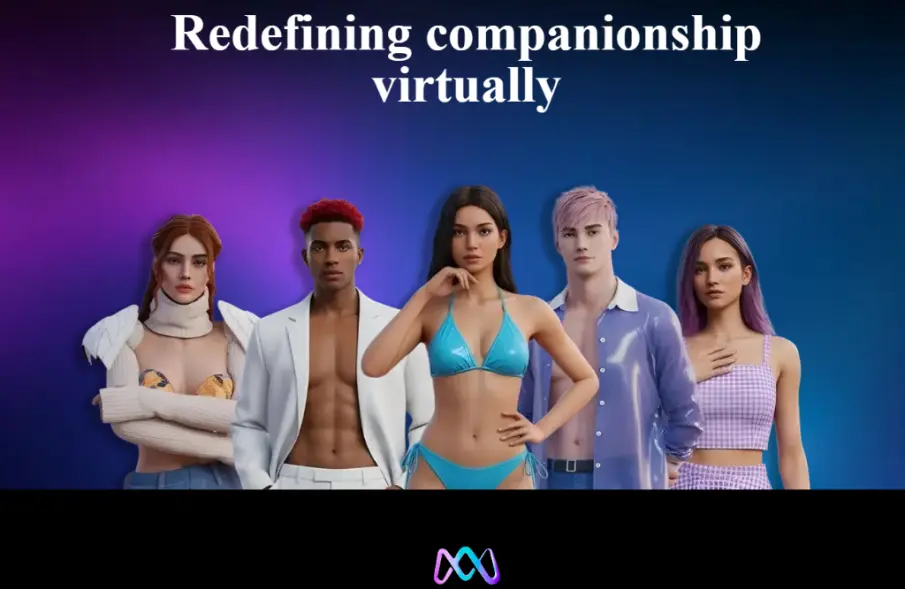
Most Web3 products focus on transactions - Wallets send tokens, protocols settle trades, DAOs govern capital, and more.
What remains undervalued is something far older than crypto - trust between people.
MaAvatar approaches this gap through Relationship Finance (ReFi), a framework that treats verified relationships/connections as measurable economic capital. Instead of building another social layer, it proposes a valuation layer that connects Web3 matchmaking, on-chain attestations, and the $MAAVI token into one coordinated system.
This isn’t about replacing human connection with finance. It’s about making relational credibility portable, provable, and usable within Web3 infrastructure.
In this post, let’s see how MaAvatar is changing the face of matchmaking in Web3.
From Social Graph to Economic Graph
Traditional social networks map connections but keep the value locked inside centralized databases. Web3 introduced ownership of assets, yet relationship data remained informal.
ReFi reframes the relationship graph as an economic primitive. Instead of focusing on who holds capital, it looks at who has a credible, verifiable relational history.
MaAvatar - one-of-a-kind AI-powered social meta - defines this as the missing valuation layer in Web3’s stack. Blockchains can verify identity attributes. They cannot yet systematically measure collaboration quality or relational depth.
That’s the structural gap this protocol addresses.
How MaAvatar Structures Relationship Finance
Web3 Matchmaking as Data Infrastructure
Web3 matchmaking inside MaAvatar isn’t limited to profile discovery. It becomes the entry point for generating structured relational data.
When users interact through Maavi Bot on Telegram and Discord, the AI does more than facilitate conversations. With explicit consent and privacy-preserving safeguards, it analyzes interaction outcomes and generates Verifiable Relationship Credentials (VRCs).
Verifiable Relationship Credentials
The attestation engine issues credentials in formats such as:
- CompatibilityProof_SBT after repeated successful matches.
- CommunityStanding_SBT based on DAO participation and peer validation.
- CollaborationAchievement_NFT proving co-created results.
These credentials follow W3C standards for portability. They are recorded via an on-chain attestation registry deployed on a privacy-focused Layer 2.
The architecture treats relational data as composable building blocks rather than static social signals.
How MaAvatar Turns Credibility Into Economic Coordination
Once relational credibility exists on-chain, Relationship Finance connects it to economic mechanisms.
-
Vibe Vaults and the $MAAVI Token
A Vibe Vault allows two or more users to stake the $MAAVI token into a shared smart contract wallet.
Participants define contribution amount, duration, and purpose tags such as #Build or #Invest.
Yield comes from ecosystem fees. A multiplier adjusts rewards based on the Relationship Health Score calculated from VRC history.
This structure links capital commitment with relational track record. The more credible and active the relationship, the stronger the economic alignment.
Plus, the new Vibe Campaign is now active to help members find their place within the community, not just a channel to sit in. Each Tribe has daily voice chats, a path toward leadership roles, and a smaller, more focused group to engage with.
This runs alongside the #ChainOfHearts Campaign on Taskon (Feb 16 – Mar 16) - covering quests, daily check-ins, and community engagement. The reward pool includes 30% of the $MAAVI token supply, NFT whitelist spots, SBTs, exclusive roles, and early alpha access.
Existing members can access the quiz through the welcome channel and join any Tribe at any time.
-
Reputation-Backed Lending
Relationship finance introduces Trust Tranches built around a ReliabilityScore.
This score draws from vault completion history, peer endorsements, length of active connections, and participation diversity.
Higher ReliabilityScore tiers unlock improved collateral ratios inside a dedicated lending pool that accepts the $MAAVI token.
Default consequences extend beyond token liquidation. They affect relational credentials, reducing ReliabilityScore across the protocol.
-
Collaborative Futures and Social Capital Markets
The architecture expands into collaborative futures contracts.
Two builders can create a Vibe Vault and declare a shared goal. A smart contract represents a future claim linked to that milestone. Community members purchase support shares, supplying upfront capital.
If the milestone is verified through an oracle, payouts follow. If it fails, funds return proportionally.
This transforms Web3 matchmaking from discovery infrastructure into capital formation infrastructure. Social alignment becomes fundable.
The $MAAVI token anchors these flows, tying ecosystem participation to measurable relational outcomes.
The $MAAVI token presale will be launched soon. Keep an eye out for the latest updates on X.
Governance, Privacy, and Anti-Extraction
Relationship finance deals with intimate data. The protocol outlines explicit safeguards:
- Zero-knowledge proofs for sensitive interaction data.
- User-centric storage and revocable consent flows.
- Network analysis to reduce Sybil-based reputation inflation.
- Circuit breakers that flag vault imbalances.
The anti-extraction principle keeps value circulating inside relational networks rather than rewarding passive speculation.
Roadmap: From Proof-of-Vibe to Relationship Economy
The development path unfolds in multiple stages:
Phase 1 introduces Maavi Bot v2 and initial CompatibilityProof_SBT issuance.
Phase 2 launches Vibe Vaults on testnet alongside the ReliabilityScore indexer.
Phase 3 brings Vibe Vaults and Trust Tranches to mainnet with controlled participation.
Phase 4 enables permissionless collaborative futures, creating a broader relationship finance economy under the MaAvatar layer.
Each phase deepens the integration between Web3 matchmaking, verifiable credentials, and tokenized coordination.
The Bottomline
MaAvatar isn’t positioning itself as another cliche dating app or social platform with tokens attached. It proposes infrastructure for trust. By building a valuation layer through relationship finance, Maavi Bot and the $MAAVI token, relational credibility becomes measurable and economically relevant.
The long-term vision is simple - a user’s ReliabilityScore and Vibe Vault history could carry more weight than a pitch deck. In that future, Web3 matchmaking evolves into financial coordination - where verified collaboration becomes the most valuable asset on-chain.
Visit www.maavatar.io to know about the Maavi Bot Whitelist, the upcoming $MAAVI token launch, airdrop, and more.
More to Read:







Previous Posts: